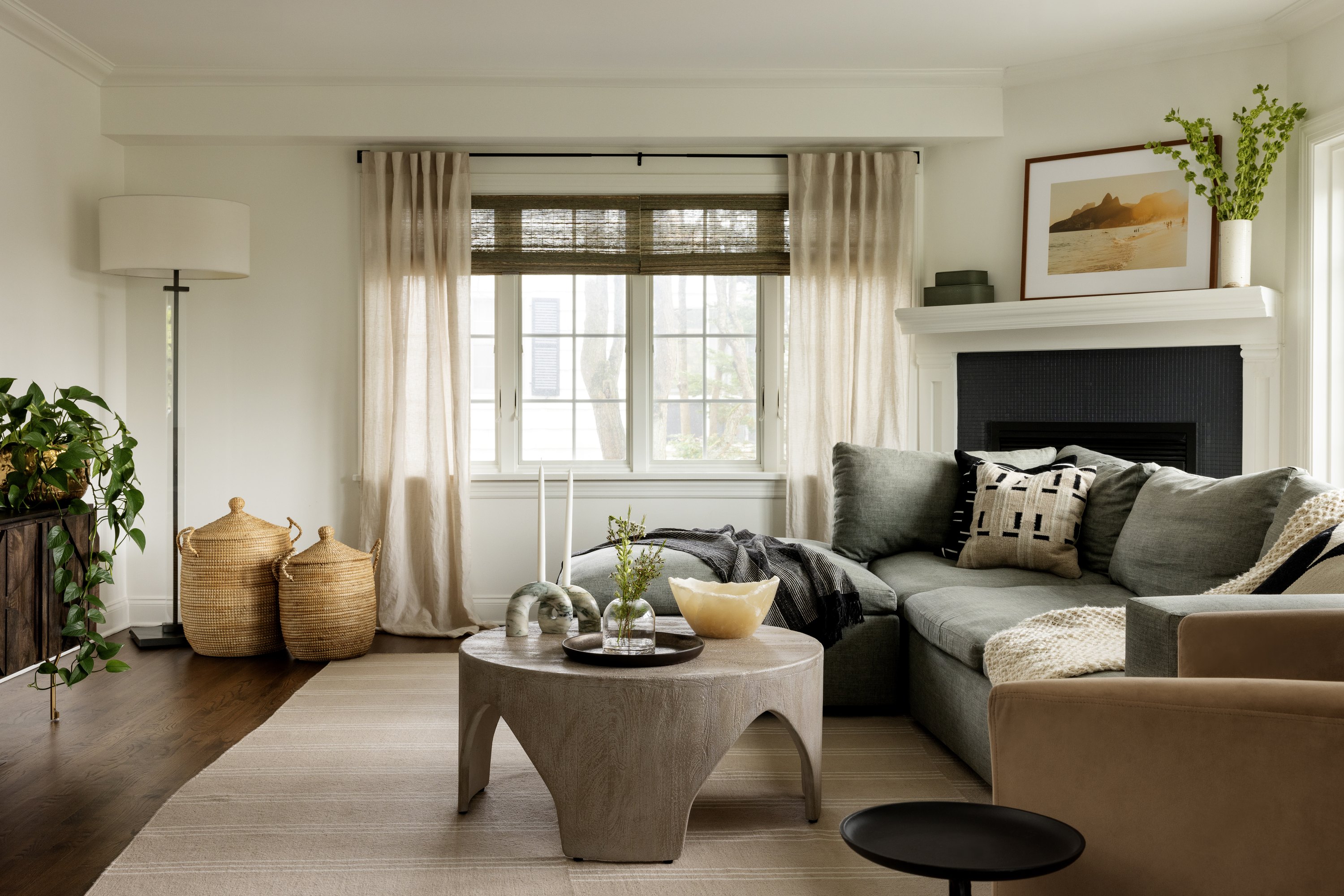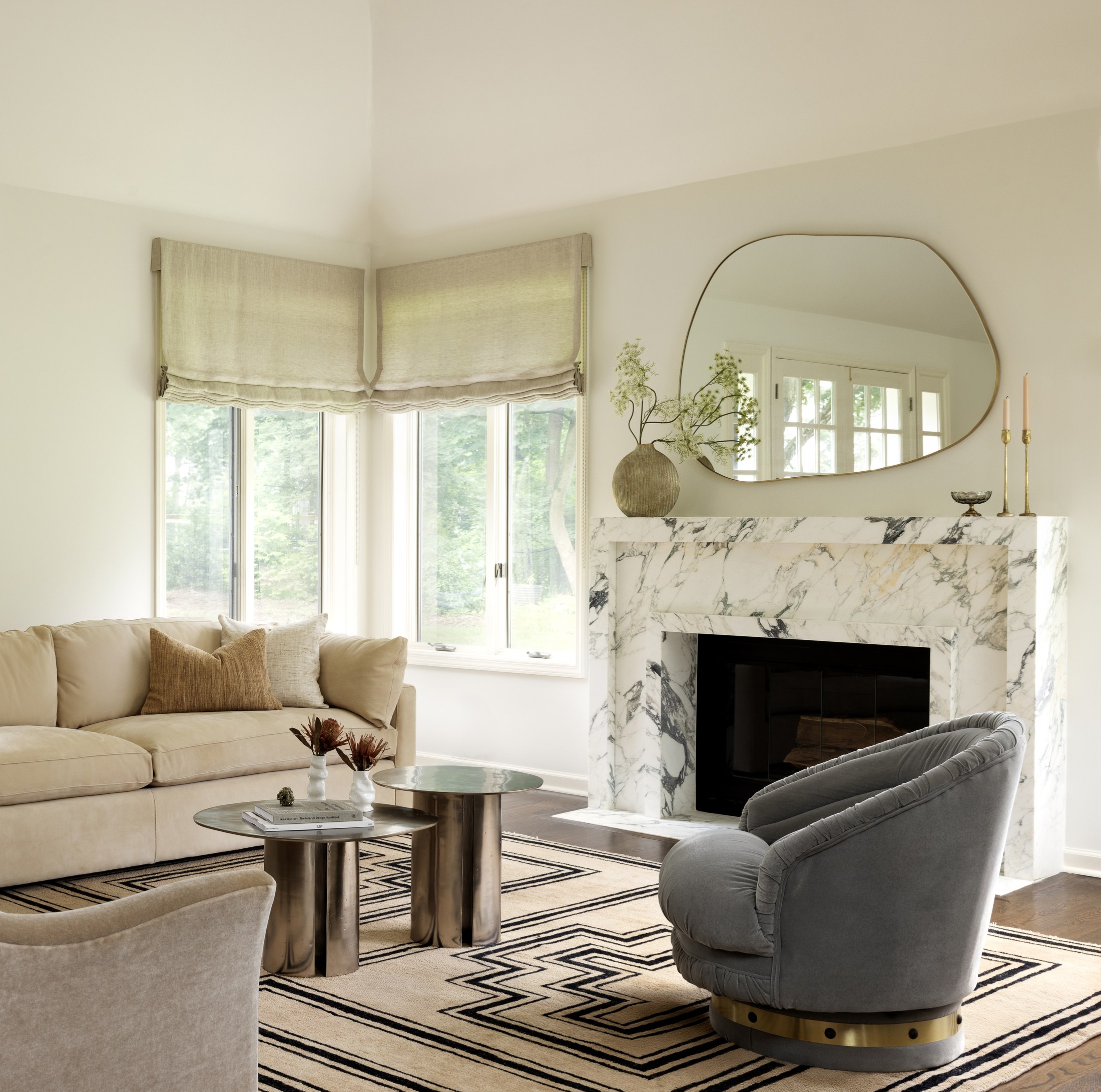
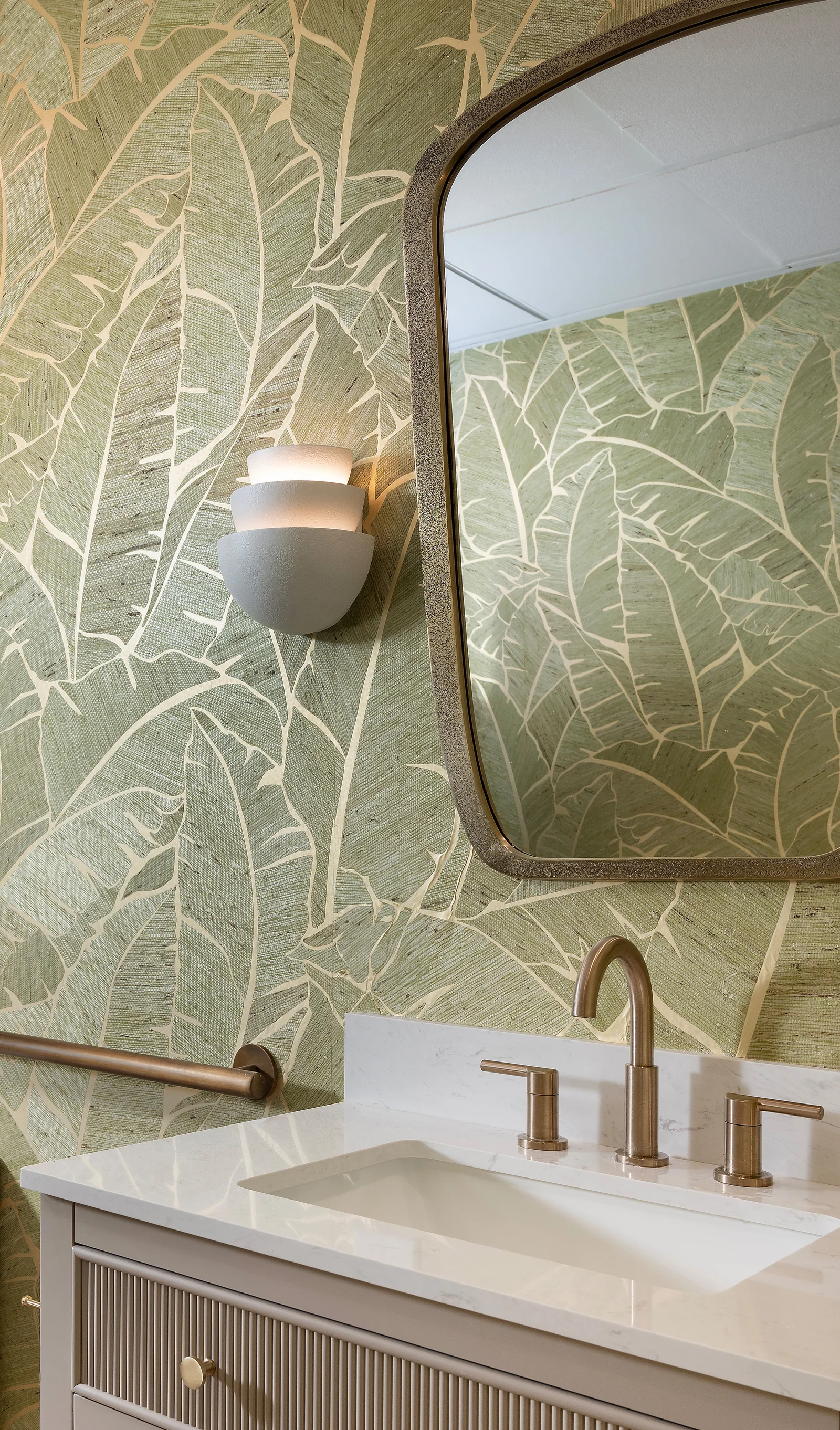
Material choices shape how a renovation looks, feels, and ages. Treating them as a connected language creates a home with continuity rather than a sequence of isolated rooms.
On This Page
Begin With Atmosphere
Before selecting a single finish, define how the home should feel. Warm or crisp, quiet or expressive, grounded or light: these decisions create a useful frame for every material that follows.
A clear atmosphere narrows the field. Instead of asking whether a stone or wood is beautiful on its own, the better question is whether it belongs to the same world as the rest of the home.
Read Materials Together
Stone, wood, plaster, metal, and textile should be reviewed as a group. Each carries color, pattern, reflection, and texture. When one material is visually active, the surfaces around it can become quieter.
This balance is what keeps a palette rich without becoming busy. Contrast can be intentional, but it works best when there is still a shared undertone or level of softness across the composition.
Study Them in the Actual Light
Natural and artificial light change the way a material reads. A warm neutral may appear cooler near one window and deeper in a more shaded room. Reflective metal can feel soft in low light and more pronounced under direct illumination.
Samples are most useful when they are seen together and observed across the day. The goal is not to eliminate variation. It is to understand it before the material becomes part of the room.
Coordinate the Details Early
Edges, transitions, hardware, and junctions carry as much visual weight as the main surfaces. Their scale and finish can either connect a palette or interrupt it.
Considering these details alongside the larger design helps the room read as one composition. It also allows custom furniture, lighting, and built-in elements to share the same proportions and material cues.
Know Where to Be Quiet
A material-first approach is not a reason to make every surface a statement. Restraint gives the most tactile elements a place to register.
One expressive wall covering, one beautifully figured stone, or one warm metal detail can lead. Calm supporting surfaces then give the eye time to notice what matters.